

Our work
Roofing in Cedar Park, Leander and north Austin
Roofers who work north Austin — Cedar Park, Leander and Lakeway — and can show you the roofs. Waypoint runs that side of town out of an office in Dripping Springs, and every job below is one of ours, with the storm, the housing stock and what we found on the roof named. We climb every roof before we quote it, we charge nothing for the inspection, and we take no deposit. Call (512) 305-1111 — our phones are answered 24/7.
Recent work in Cedar Park
Before the work: we are not in Cedar Park. Our office is in Dripping Springs and we drive to you, which for most north Austin addresses is between half an hour and three quarters of an hour. We would rather say that plainly at the top of the page than let a well-optimised heading imply a second office we do not have. What we do have is a Google listing on this side of town, a route we drive several times a week, and the jobs below.
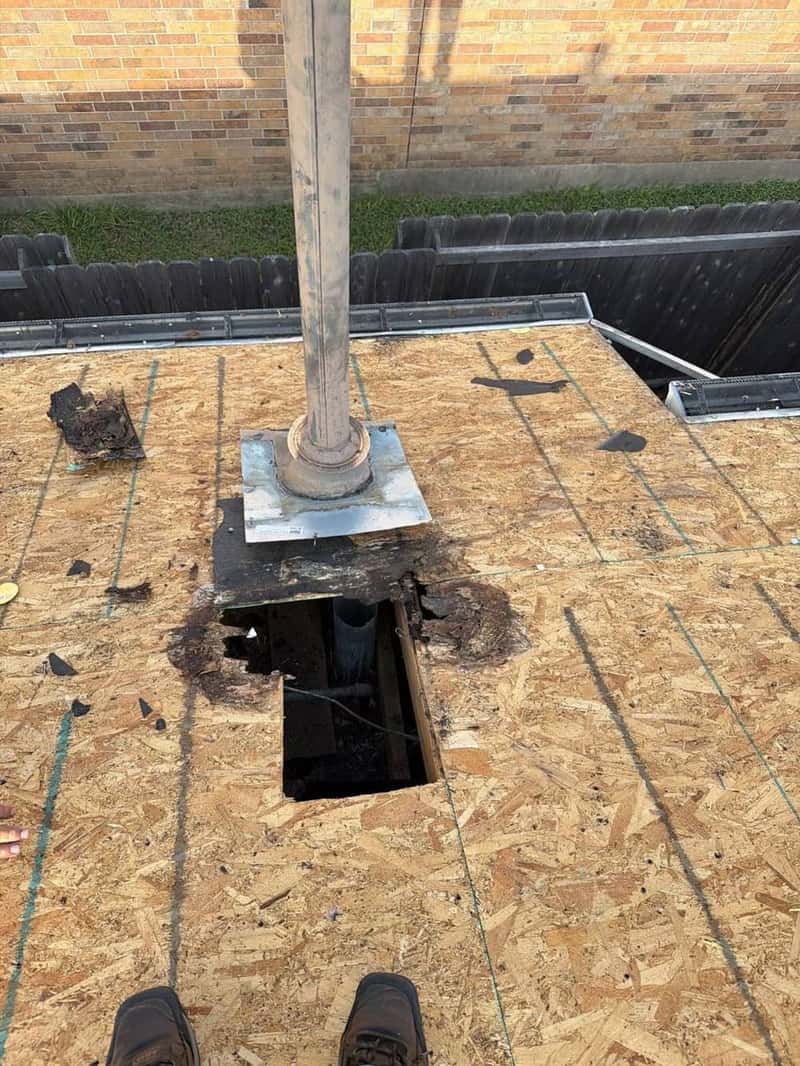
Rotted decking found during a Cedar Park tear-off
Rotted roof decking uncovered around a plumbing vent stack once the old covering came off a Cedar Park house, with the hole photographed through to the rafters below. The later frames show the deck re-covered in synthetic underlayment with shingle bundles staged at the ridge.
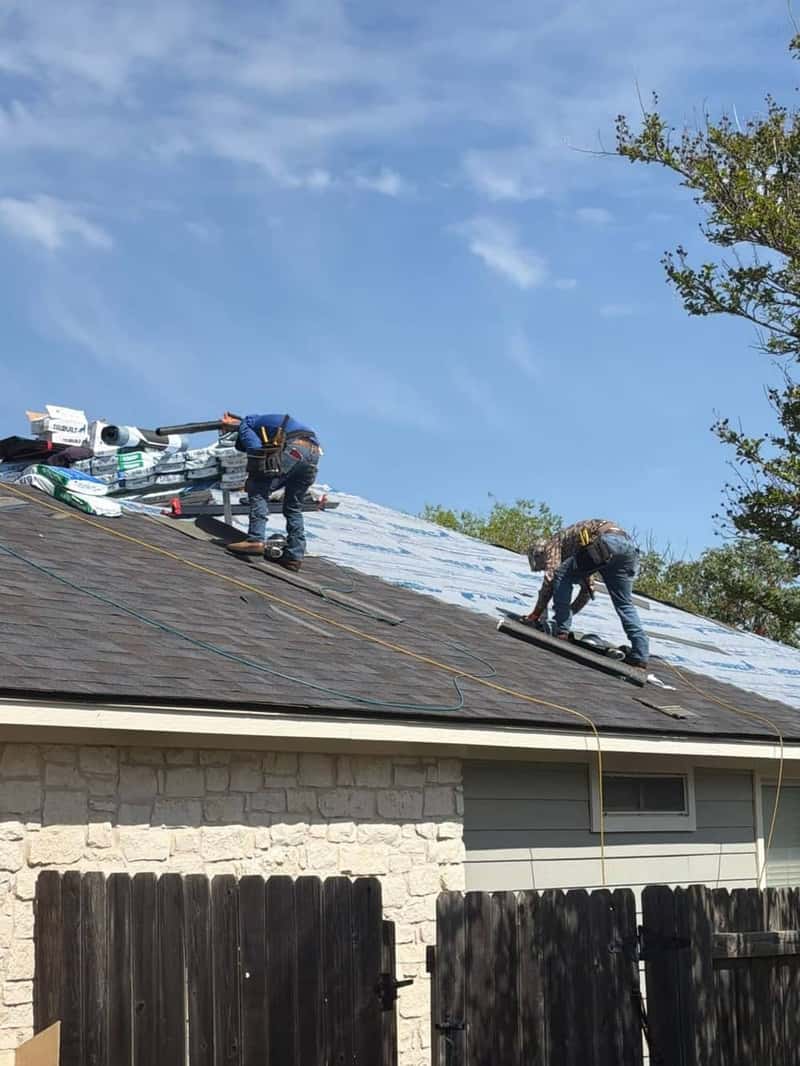
Shingles and ridge flashing going on in Cedar Park
Two Waypoint roofers laying shingles side by side on a steep Cedar Park roof, and ridge flashing being set on the same job. These are our own crew on our own job, photographed from behind while they worked.
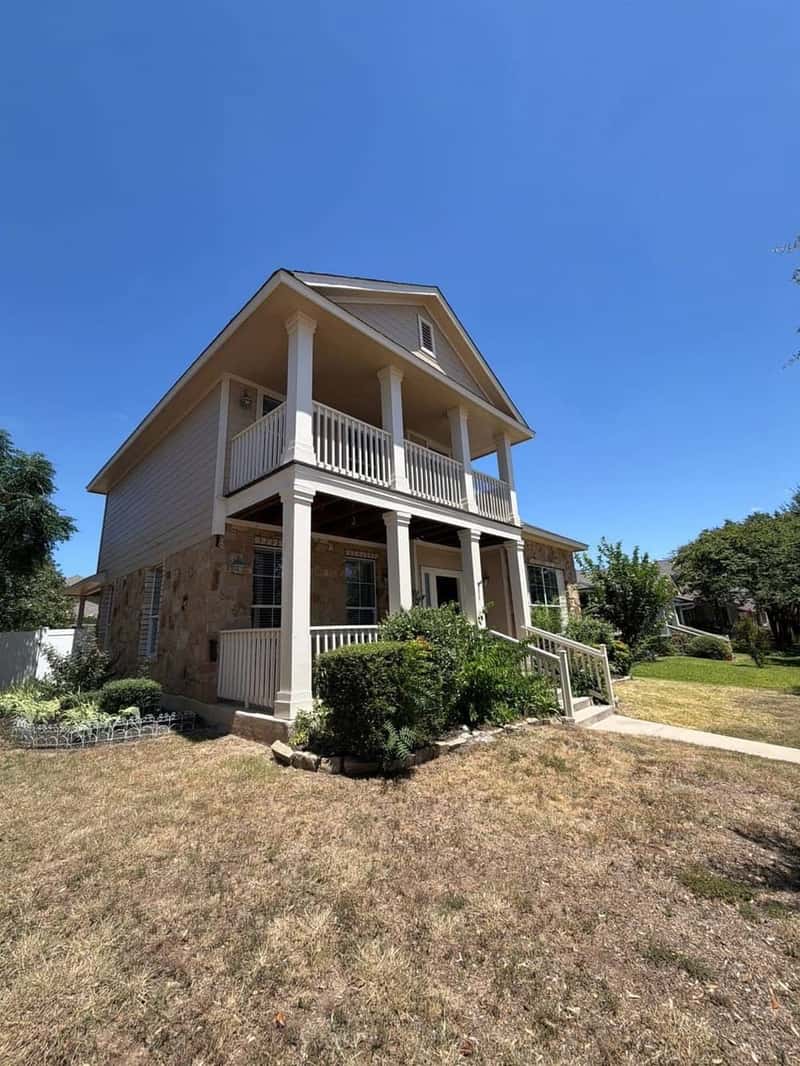
Full elevation survey of a Cedar Park craftsman home
The front elevation of a two-storey craftsman house in Cedar Park with stacked porch roofs and stone accents, photographed whole before the roof was walked. Every inspection starts with the elevations so the report shows the house, not just close-ups.
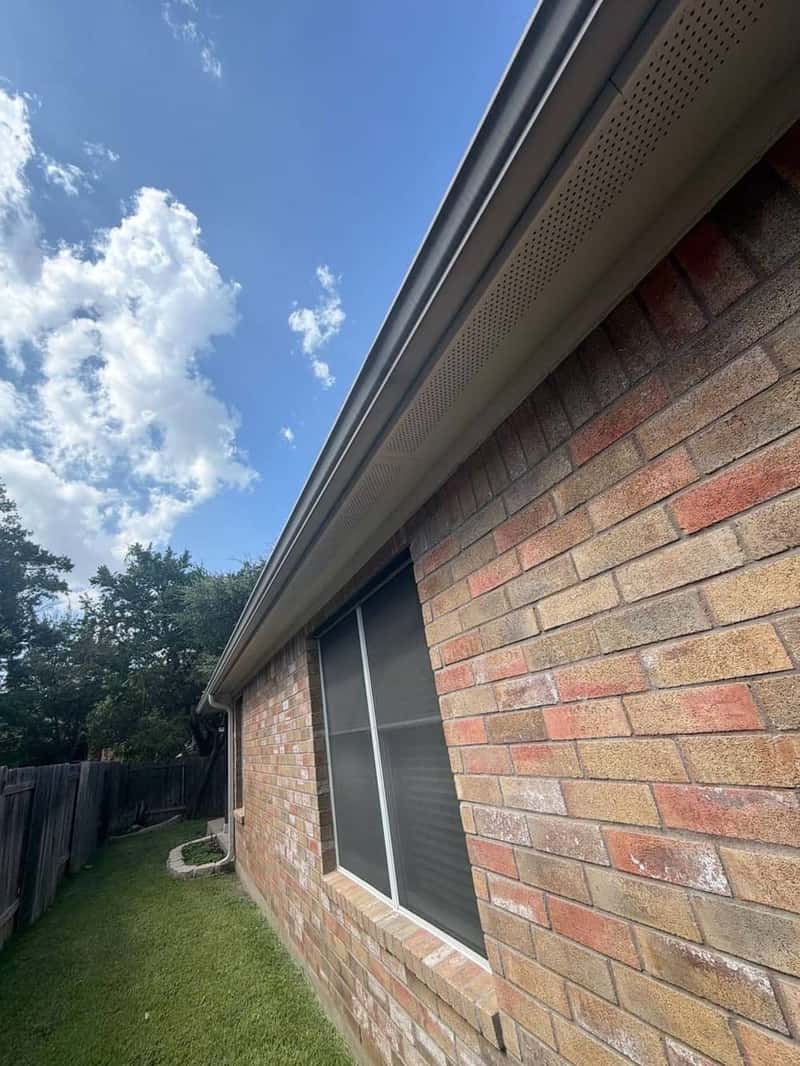
Soffit vents and gutter line checked in Cedar Park
Perforated soffit venting and the gutter along the eave of a brick home in Cedar Park, photographed from the ground. Intake venting at the soffit is half of what makes ridge venting work.
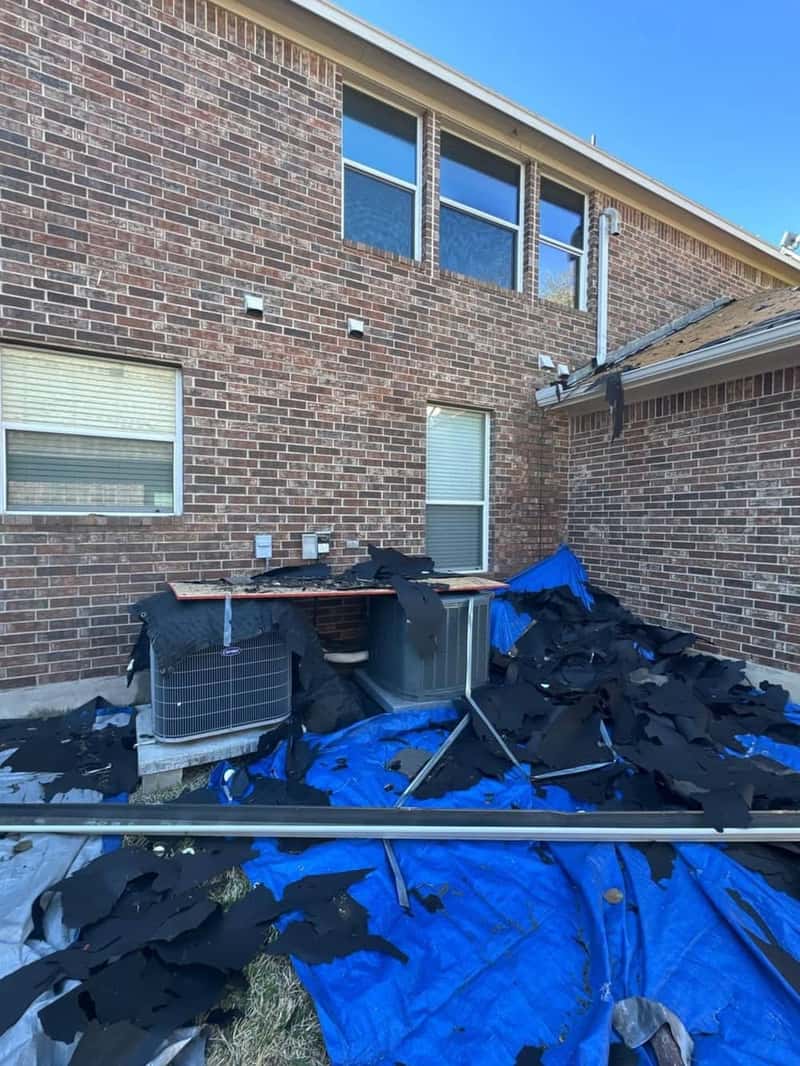
Tear-off with the property tarped in Cedar Park
A Cedar Park re-roof during tear-off, with the air-conditioning condensers tarped against falling debris and the driveway covered. The stripped shingle is piled at the corner of the house rather than left across the yard.
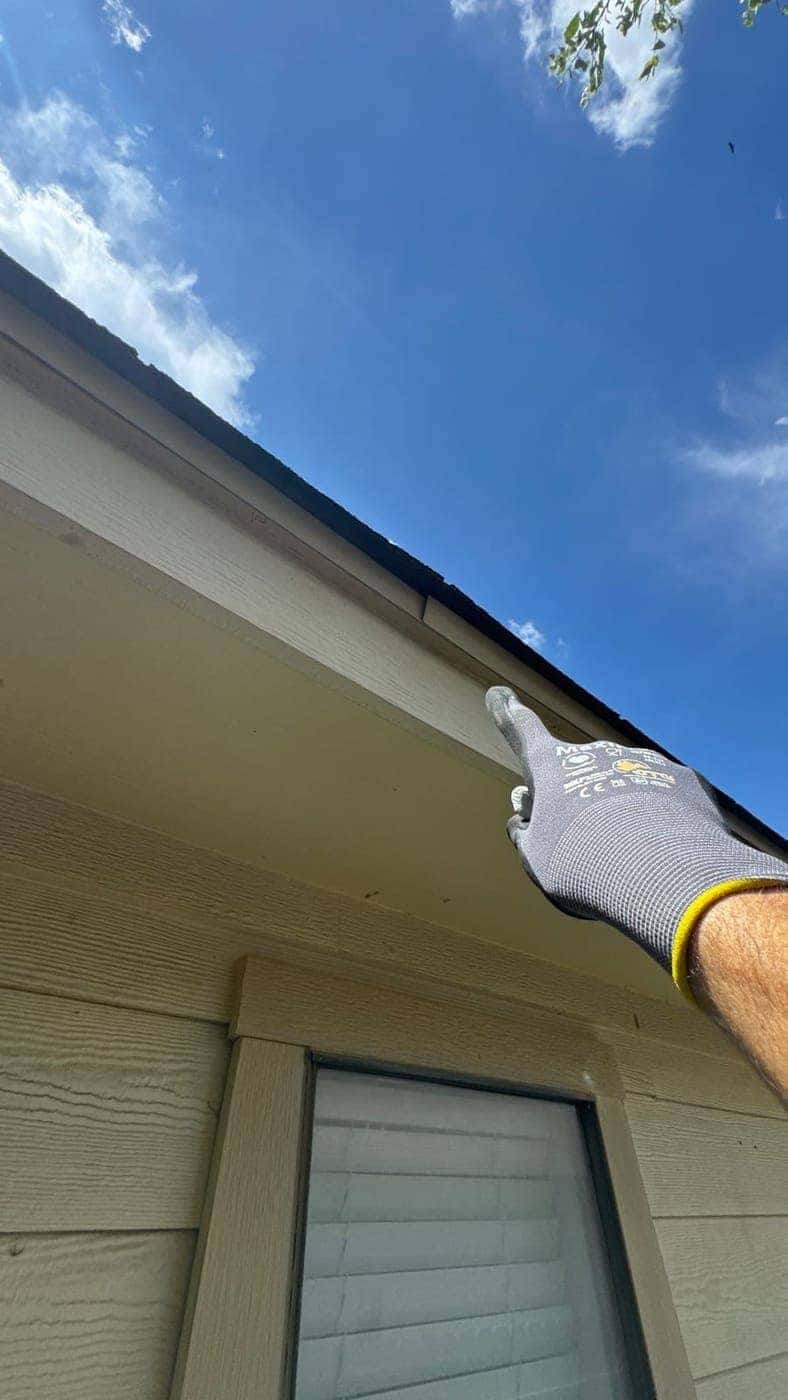
Siding trim and fascia checked in Cedar Park
Fascia and eave trim under a shingle roofline in Cedar Park, with a caulked corner seam on painted fibre-cement siding photographed close up. Exterior trim is where roof water shows up first when a detail has failed.
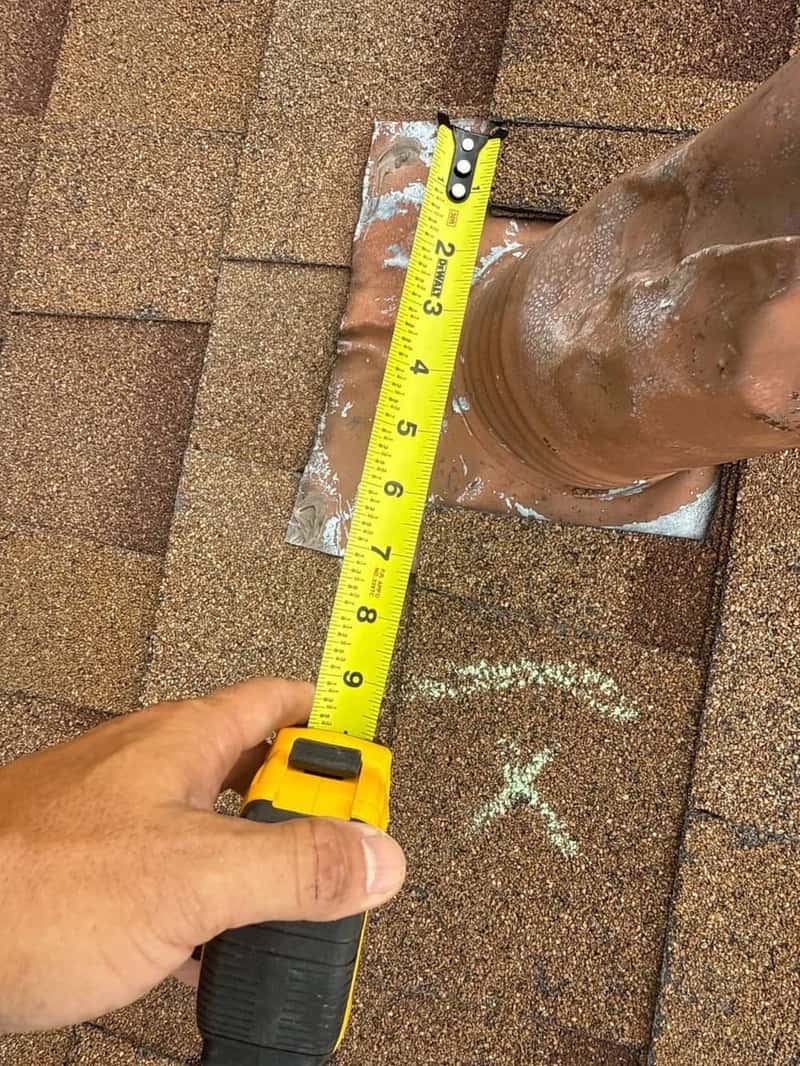
Vent pipe boots measured on a Cedar Park roof
Plumbing vent boots on a Cedar Park roof measured with a tape and marked in chalk so the replacement parts would be the right size. One frame shows a copper-capped vent stack and gooseneck on the same slope.
Cedar Park
Cedar Park is mostly production-builder housing put up in waves, and that shapes the work more than anything else about it. Streets of homes framed and roofed within a year or two of each other reach the end of a shingle’s service life within a year or two of each other as well, which is why one neighbour getting a new roof is so often followed by three more. The roofs themselves tend to be moderate-pitch composition with a lot of hip and valley, ganged plumbing and bathroom vents on the back slopes, and a low-slope porch or patio tie-in at the rear that was detailed quickly on a production schedule. In our experience the tie-in and the vent penetrations fail years before the field of the roof does.
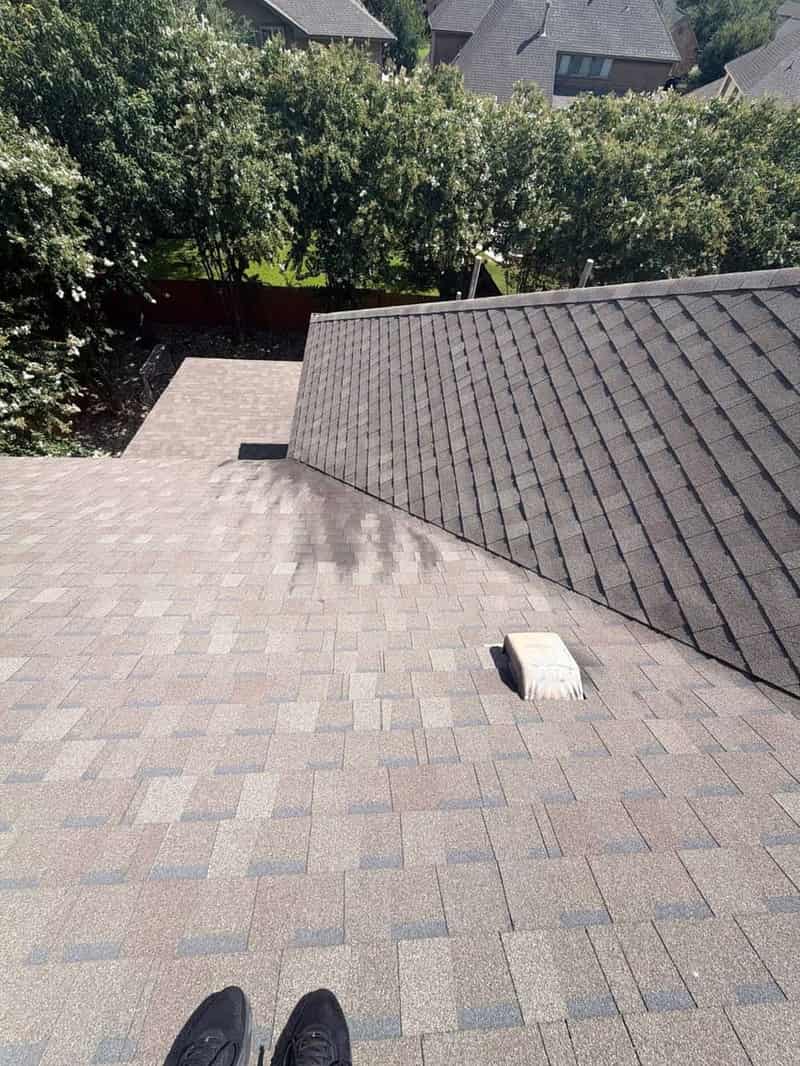
What that looks like in practice: on a Cedar Park job in August 2026 we pulled the old covering off and found rotted decking around a plumbing vent stack, open through to the rafters — damage that no satellite measurement and no ladder-and-binoculars estimate would ever have caught. On another we spent the visit measuring vent boots with a tape so the replacement parts would actually fit the stacks rather than being close enough. In March 2026 our own crew was photographed laying shingles and setting ridge flashing on a steep roof here; earlier that month, on a different house, we tarped the air-conditioning condensers and the driveway before a single shingle came off.
Hail is the other half of the story. The NCEI record has thirteen reports across Williamson County on 28 May 2025 with stones to 2 inches and Cedar Park among the named locations, and a lighter round on 18 April 2026 with an inch reported at Cedar Park. If you were under either of those, the question is not whether it hailed — it is whether your roof took a bruise, and that is a question somebody has to answer on the roof with chalk in their hand.
Leander
Leander runs newer than Cedar Park on average, with more of the roofs still inside their first covering, and a growing number of homeowners choosing metal when the composition roof finally goes. The standing-seam job in the photographs below is a Leander install from July 2026 — panels, ribs, ridge cap, photographed during the work rather than staged afterwards. Elsewhere in town our work has been storm-shaped: chalk hail notation across a shingle field in 2025, hail circled on window screen mesh in 2026, and an attic opened up to check the deck from underneath, which is where a marginal roof usually gives itself away.
Williamson County took 3-inch hail on 16 May 2025 with Leander among the named locations, and the 28 May 2025 round put 2-inch stones down across the same county. Two large hail days six weeks apart is the sort of season that ends with a lot of roofs replaced and a lot of homeowners talking to contractors they had never heard of a fortnight earlier.
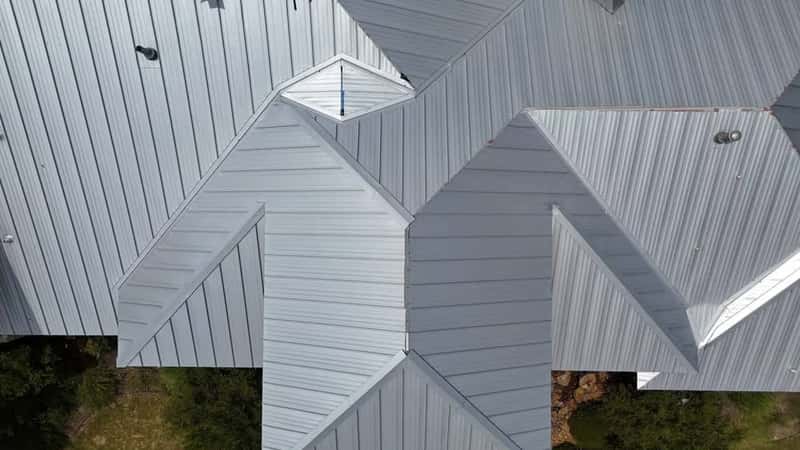
Standing-seam metal roof installed in Leander
A standing-seam metal roof going on in Leander, photographed wide during the install and close up at the panel ribs and ridge cap. The seams and trim in these frames are the finished detail, not a mock-up.
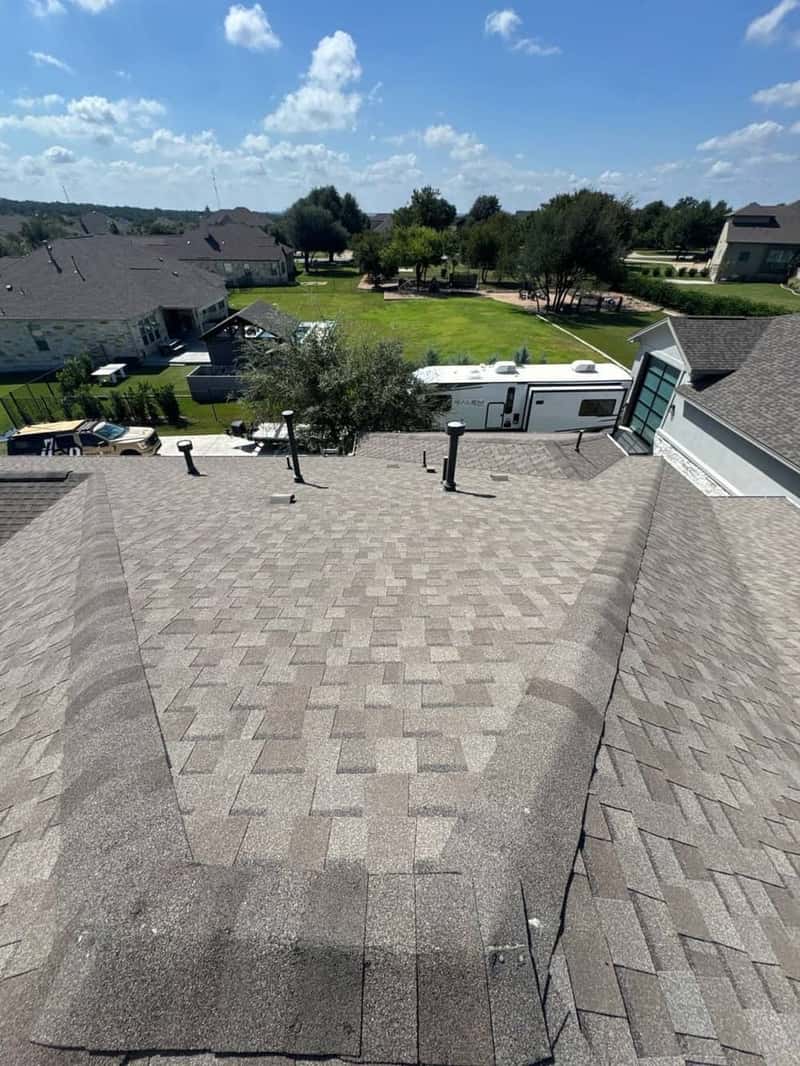
Clean shingle roof surveyed in Leander
A well-kept shingle roof in Leander walked and photographed slope by slope over the neighbourhood street below. Not every inspection finds a problem, and the photo set is the record either way.
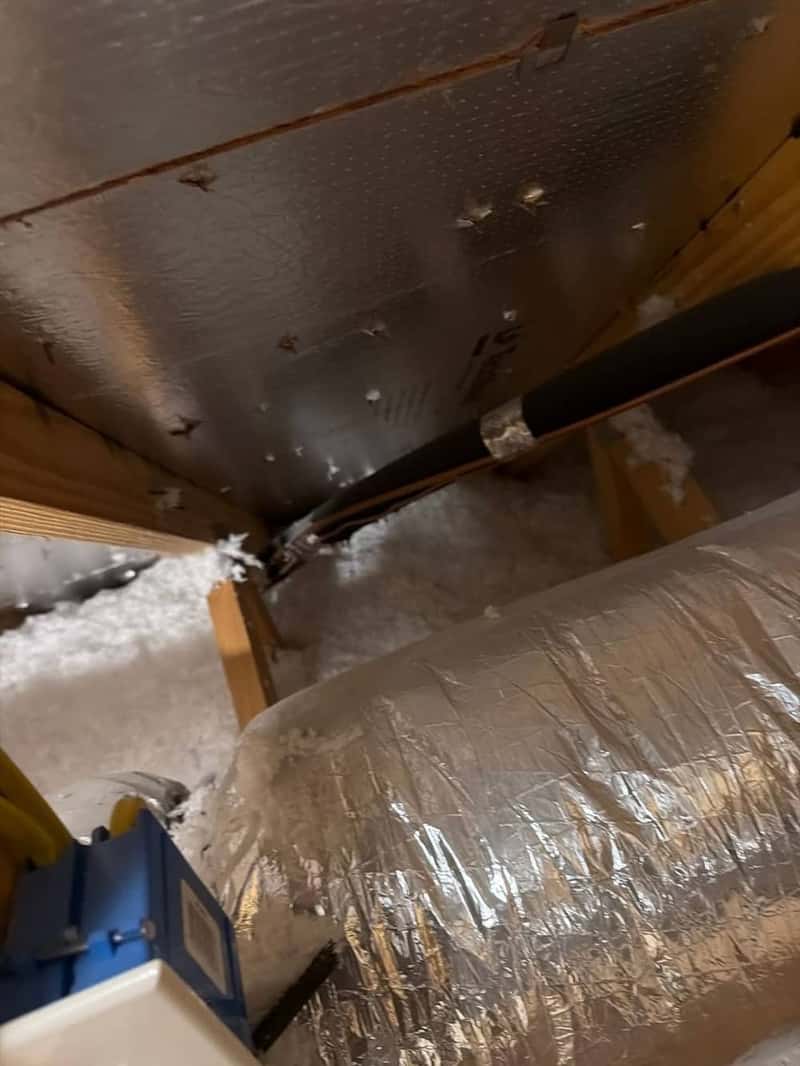
Attic ventilation and ductwork inspected in Leander
The attic of a Leander home photographed from inside: ductwork, blown-in insulation and the underside of the roof deck. What the deck looks like from below often answers a question the roof surface will not.
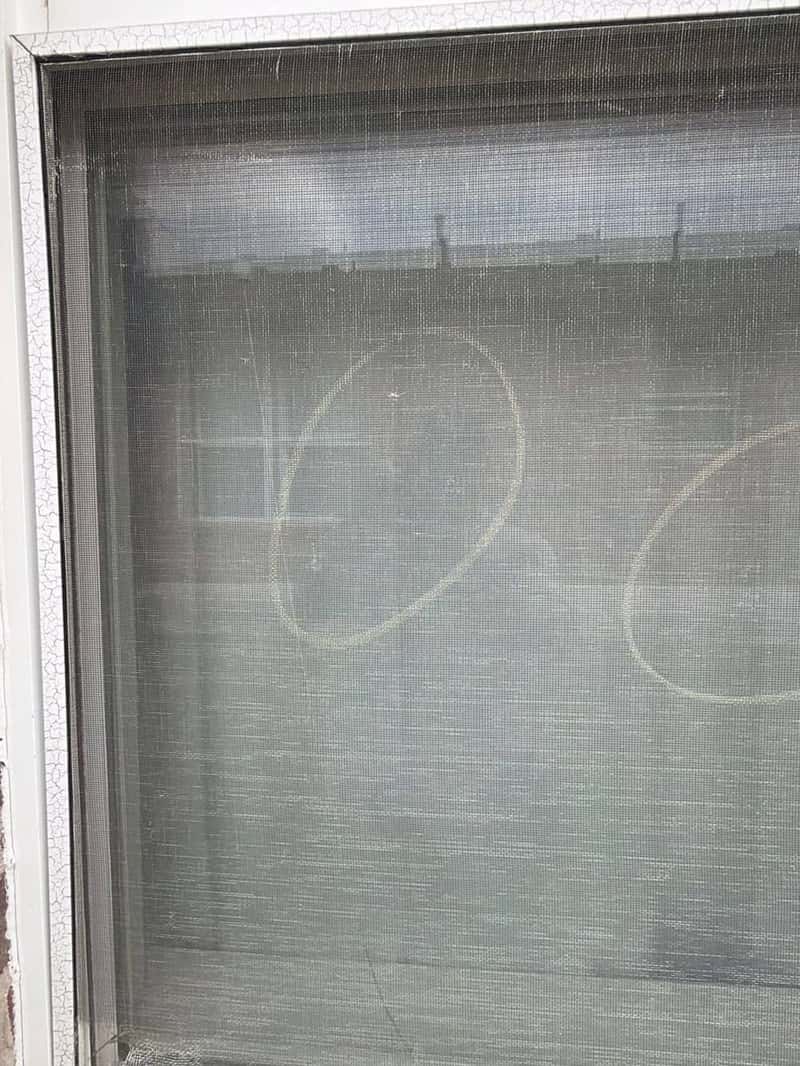
Hail on window screens and peeling fascia in Leander
Hail impact points circled on window screen mesh at a Leander house, with the roof eave and fascia photographed on the same visit showing peeling paint.
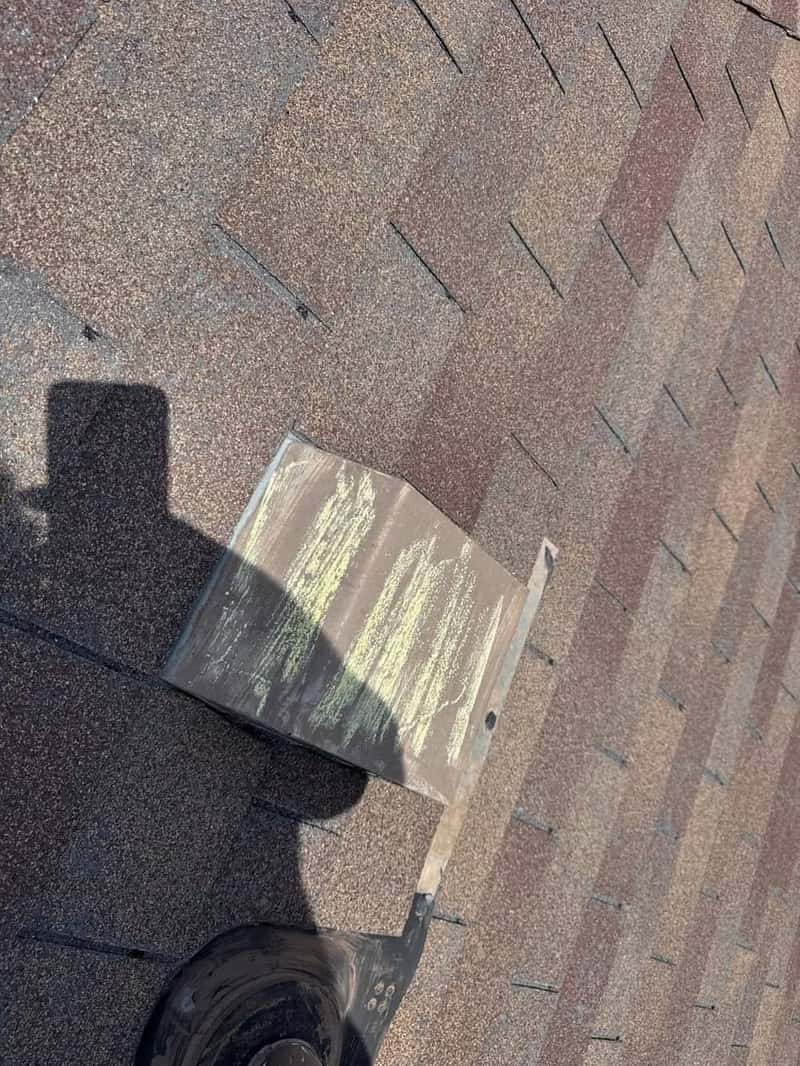
Hail inspection chalked out on a Leander roof
Chalk hail markings around a vent boot and across the shingle field of a Leander roof, with granule wear photographed at a seam intersection. The lettering is the inspector's own notation, left on the roof so the photographs carry it.
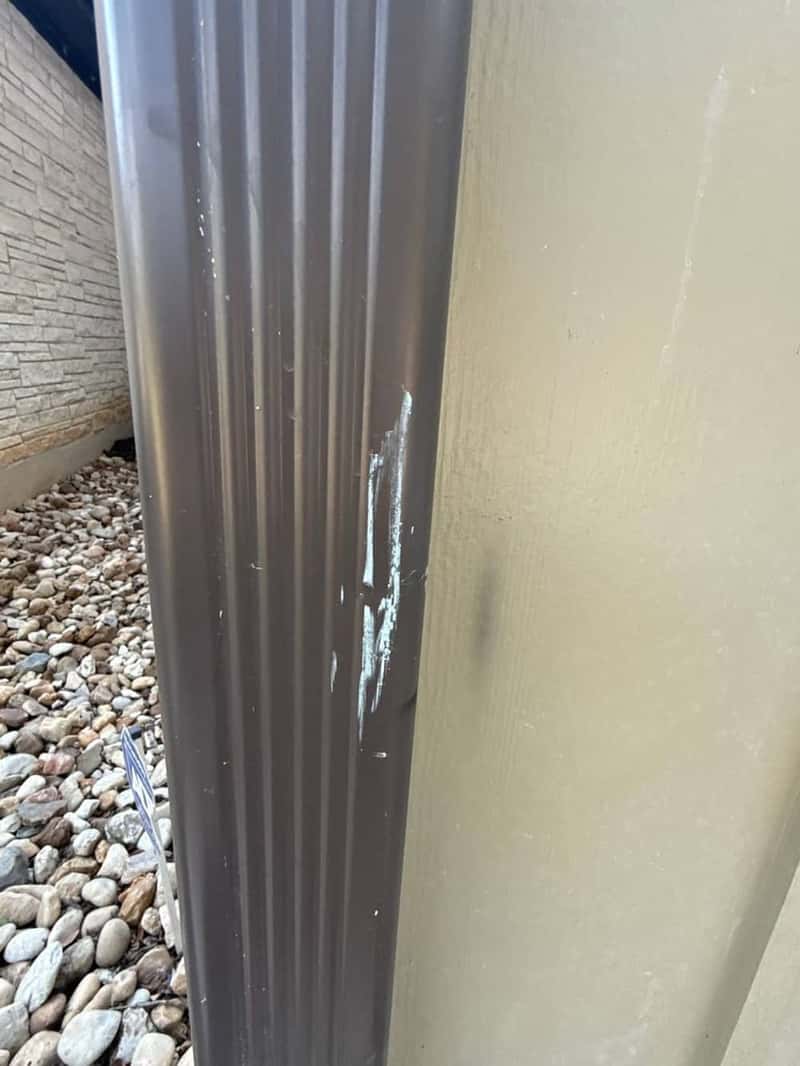
Downspouts and stucco seams checked in Leander
Downspout corners and a caulked seam against stucco siding on a Leander home, photographed close up. A downspout that has pulled at the seam moves water into the wall instead of away from it.
Lakeway
Lakeway is a different kind of roof: larger, steeper, far more cut up, and often stone or stucco underneath. More valleys and more dormers means more places where two planes of water meet and get redirected, and a steep pitch means a lot of it cannot be assessed from the ground at all. Our 2026 work here has mostly been survey and repair — a large stone and stucco house walked under a gathering storm with the valleys and pipe-boot flashing photographed in place, lifted ridge caps and a chimney cap whose wood trim had rotted out around the spark arrestor, and attic penetrations checked from the inside.
The NCEI record has hail reported at the Lakeway airport station at 1.5 inches on 1 April 2024 and again on 27 March 2024. On a roof this complicated a hail inspection takes longer, because the answer for the main field and the answer for the dormer cheeks are frequently not the same.
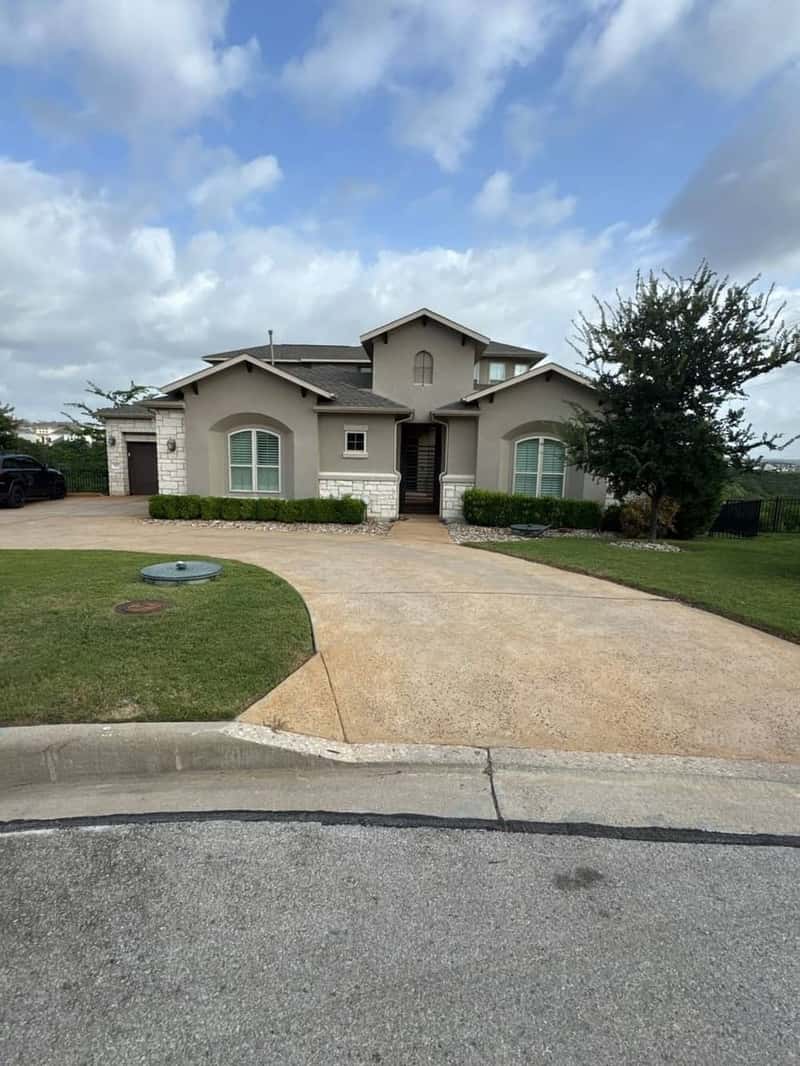
Valleys and dormers surveyed on a large Lakeway roof
A large two-storey stone and stucco house in Lakeway walked under a cloudy sky, with the valley where two slopes meet and the pipe boot flashing beside it photographed in place. The dormer frames were taken as the weather came in.
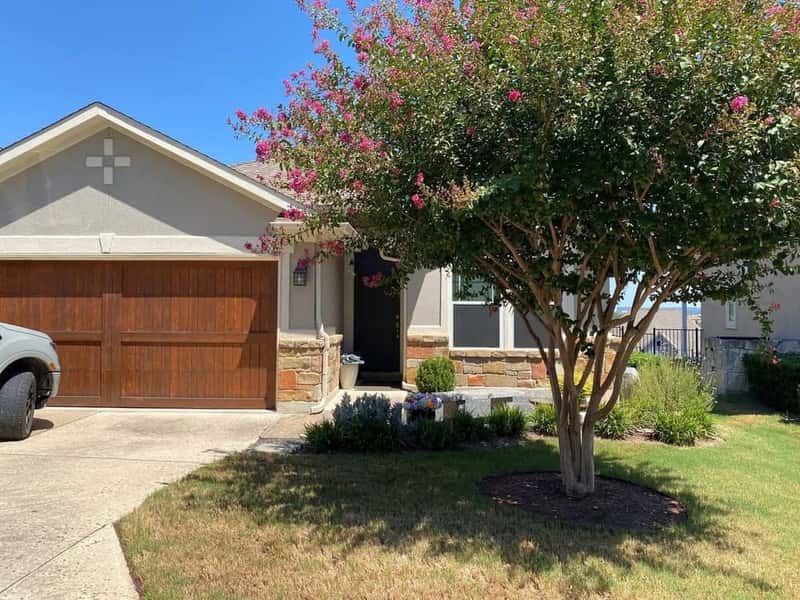
Gutter downspouts checked on a Lakeway home
A single-storey stucco home in Lakeway photographed at the elevation, with the white downspout elbow at the stone wall corner above the driveway shown close up.
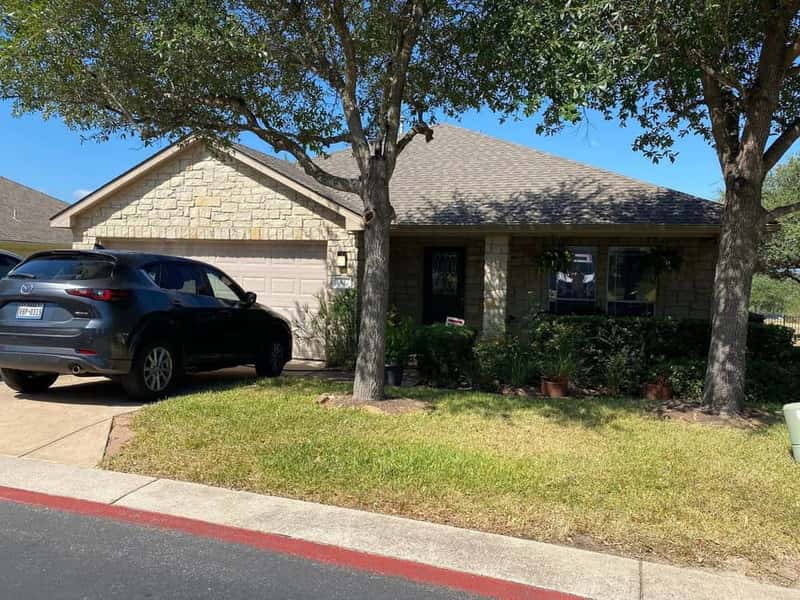
Steep shingle roof and dormers photographed in Lakeway
A large cream stucco house in Lakeway with a steep gray shingle roof, photographed through the oak trees and again at the dormer. The elevation shots are what the report opens with.
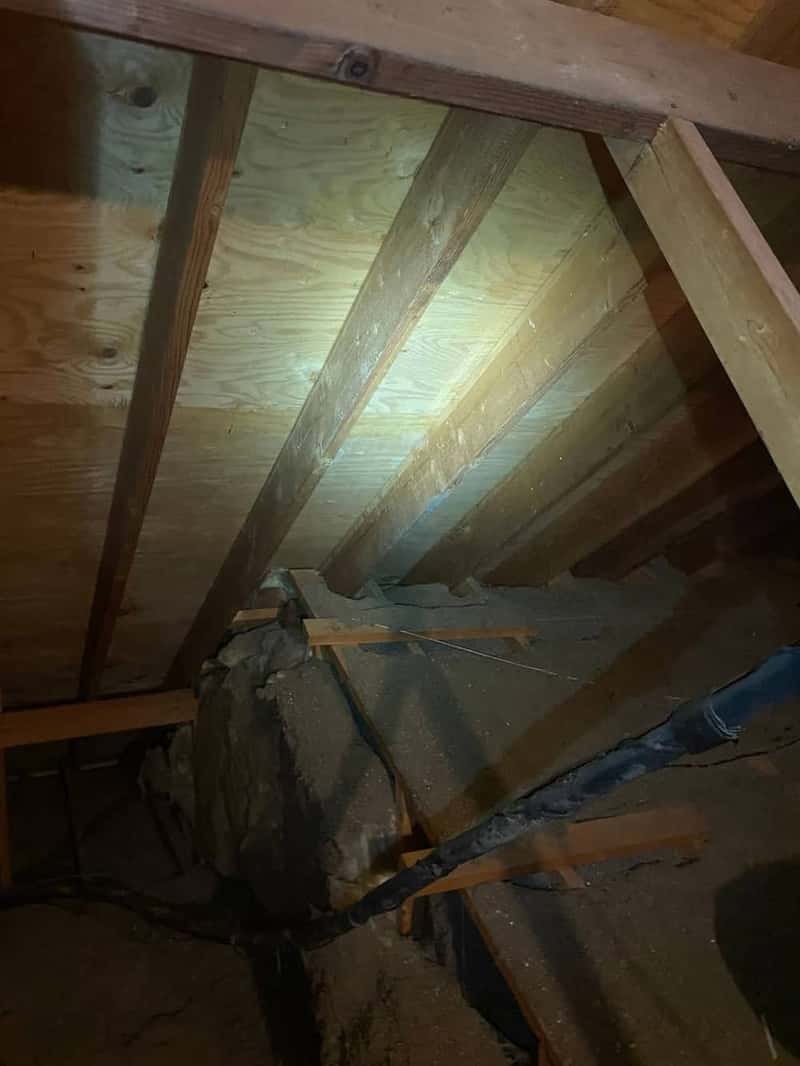
Attic penetrations checked from inside in Lakeway
A Lakeway attic photographed from inside, with the rubber pipe boot sealed around a vent penetration, the rafter baffles and an insulated pipe run through the framing all documented.
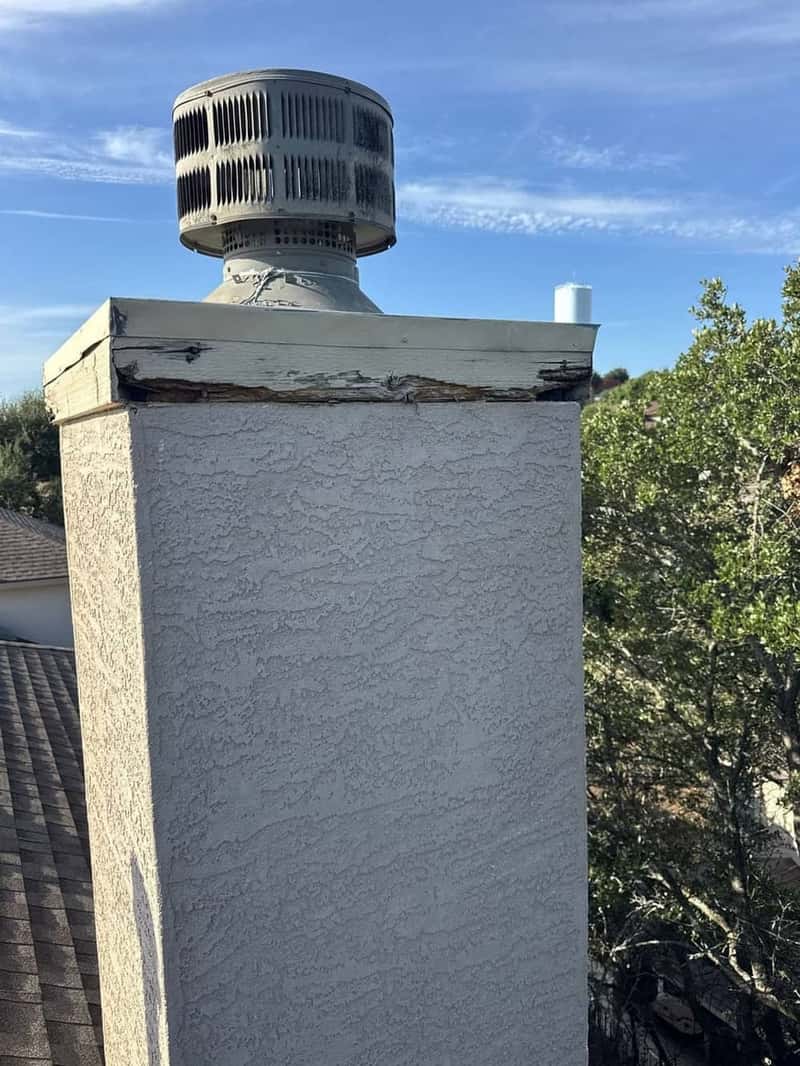
Lifted ridge caps and rotted chimney trim in Lakeway
Ridge cap shingles lifted and damaged along a Lakeway roof edge, and a chimney cap whose wood trim had rotted out around the spark arrestor. A tarp was over the affected area when the photographs were taken.
North and north-west Austin
Inside the Austin city limits our work on this side of town has covered the full range: a tree-shaded home stripped back to bare deck and re-decked in the summer of 2026 and photographed from the air, hail hits chalked across an architectural shingle roof with a cracked pipe boot found on the same slope, and long roof planes over the hills west of the city walked slope by slope. Travis County hail history is not thin — 9 April 2024 produced 28 reports across three counties with stones to 2.5 inches, and 25 March 2021 put 2-inch hail down at Austin and Oak Hill.
The complete set of Austin jobs, north side and otherwise, is in the project gallery.
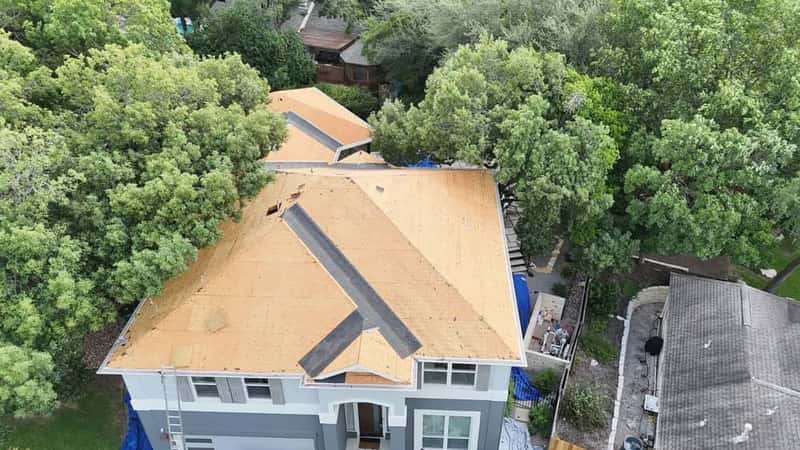
Tear-off and new decking on an Austin re-roof
A tree-shaded Austin home mid-replacement, photographed from the air with the old covering stripped and fresh plywood decking laid. The landscaping is tarped in the same frames, which is what the ground looks like while we are working.
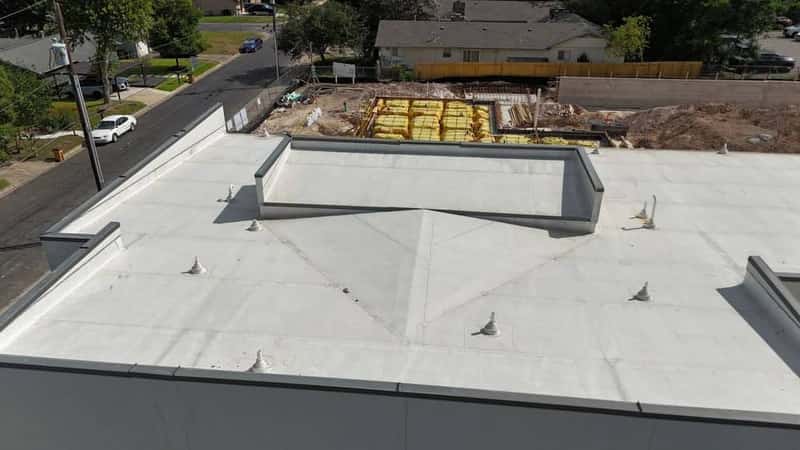
TPO membrane roof documented on an Austin commercial building
A white TPO single-ply roof on an Austin commercial building, photographed from the air and close up. The detail frames show membrane seams, sealed pipe penetrations and existing rectangular patches on the field of the roof.
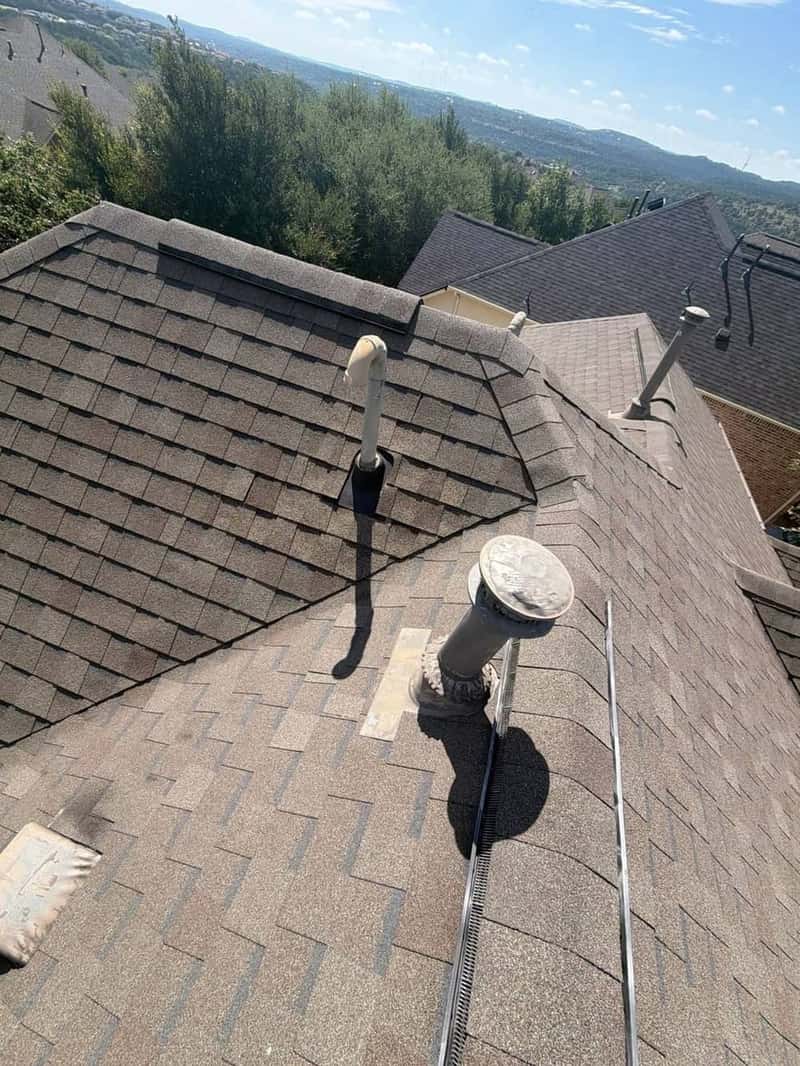
Ridge and vent stacks documented on an Austin roof
A long, symmetrical roof slope in west Austin walked at the end of the day, with the ridge, the vent stacks and a weathered plumbing stack cap photographed in place. Safety cables are visible along the ridge in one frame.
How we work up here
The same way we work anywhere, with one difference: we plan for the drive. An inspection in Cedar Park is booked as a real appointment with a real window, not a “sometime Tuesday”, because we are not five minutes away and we know it. Beyond that, nothing changes. We climb the roof. We photograph every slope and every detail we are worried about. You get the report, with the photographs in it, whether or not you hire us. There is no charge for the inspection and no deposit on the work — you pay when the job is finished.
If hail or wind is involved, you file your own claim. Texas Insurance Code §4102.163 forbids a roofing contractor from acting as a public adjuster, so we do not negotiate your settlement and we do not promise an outcome. What we do is document the damage properly, meet your adjuster on the roof if you invite us, build to the approved scope, and supplement with evidence if the scope comes back short. Texas law also makes waiving or absorbing your deductible a criminal offence — if a contractor knocking on your door after a storm offers to cover it, that tells you what you need to know about the rest of their quote.
What we are not is a crew that appeared after the last storm. Waypoint was founded in Dripping Springs in 2024 and it is still there in the years when nothing hits. That matters for one practical reason: a five-year workmanship guarantee is worth exactly what the company behind it is still doing in five years.
Where to next: roof replacement · roof repair and leaks · roof inspection · storm and hail damage · the full project gallery · everywhere else we work · contact and office details
Where the hail dates come from
- NOAA National Centers for Environmental Information, Storm Events Database — hail reports, Travis and Williamson counties — https://www.ncdc.noaa.gov/stormevents/ Every hail date and size on this page comes from this database. Each entry is one spotter or radar-estimated report at a point, with the size estimated against a reference object, so it describes where hail was reported rather than where damage occurred. Accessed .
What we carry
Texas does not license roofers. Here is what we carry:
RCAT member · Owens Corning · CertainTeed · Malarkey · Versico · HAAG-certified inspectors · Insured: $1M per occurrence / $2M aggregate general liability · Dripping Springs Chamber · Lake Travis Chamber · No deposit, pay on completion
Best of Dripping Springs 2025 (Dripping Springs Express News)
Common questions
Do you serve Cedar Park and Leander?
Yes, and the jobs on this page are the evidence rather than the assertion. Cedar Park and Leander are two of the six places where we have completed enough work to write it up with photographs, dates and what we actually found. Lakeway is a third. If you are somewhere between them, ring and ask — the answer takes a minute and it is either yes or no, not a maybe.
Where is Waypoint actually located?
Dripping Springs. That is where our office is, where the owners live, and where the vans start the day. We do not have a second office in Cedar Park and we are not going to imply that we do — we drive to north Austin, which for most of these addresses is somewhere between 30 and 45 minutes depending on the time of day. If having a contractor whose office is on your side of town matters to you, that is a fair thing to weigh, and you should weigh it with the true information.
How quickly can you get to a leak in Cedar Park?
Our phones are answered 24/7, so an active leak reaches somebody who can talk you through catching the water and decide with you whether it needs a tarp before anyone can get there; we then schedule the next available slot, with an active leak ahead of a routine inspection. The drive is not the constraint; the queue after a storm is. We do not publish a response clock — if we cannot get to you quickly we will tell you on the call rather than book you and hope.
What hail has hit north Austin recently?
The National Centers for Environmental Information record has thirteen hail reports across Williamson County on 28 May 2025 with stones to 2 inches, Cedar Park and Leander among the named locations; 3-inch hail on 16 May 2025 with Leander named; and a smaller round on 18 April 2026 with an inch reported at Cedar Park. Those are point reports, not storm paths — a report near your street is a reason to have the roof looked at, not proof that it was hit.
Do you charge for an inspection in Cedar Park?
No, and the drive does not change that. The inspection is free, we climb the roof rather than measuring it off a satellite image, and you keep the photo report whether or not you hire us. We also take no deposit — you pay when the job is finished.
Request a free inspection
Last updated